
Services · Water network modelling · UAE
Water network modelling & design in the UAE
We support utilities, consultants and EPC contractors with water network modelling and hydraulic design of potable, farm and irrigation networks. We verify pressures, size pipes, pumps and control valves, and set operating rules to Abu Dhabi and UAE utility criteria. We deliver studies across the UAE, the wider GCC and internationally, to the relevant local authority standards.
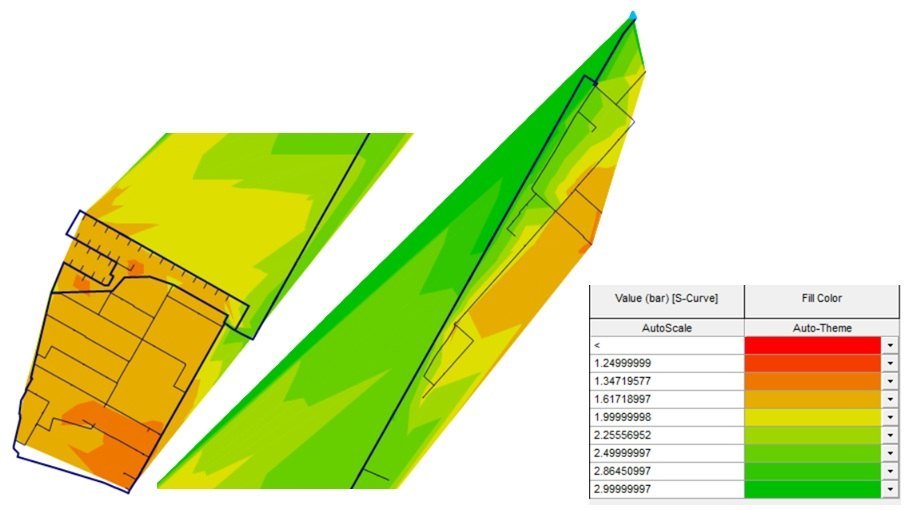
Transmission & distribution
Trunk mains, distribution mains and service connections
Pumps & control valves
Pump selection, FCV/PRV settings and tie-in pressures
Steady state & EPS
Average, peak and minimum demand, plus 24–48 h simulations
Why it matters
Why water network modelling matters
Across the UAE, farm and community networks keep growing. Every new connection changes flows, pressures and valve settings, and a network that worked at handover can fall short of minimum pressure at its remote ends once demand rises or a new branch is added.
Robust water network modelling allows you to:
- Confirm minimum pressures at every connection for average, peak and minimum demand
- Size trunk mains, distribution mains and service connections with confidence
- Select pumps that operate within their preferred range across the demand cycle
- Set control valve and pressure-reducing valve settings and define tie-in pressures
- Test variations and network extensions before they are built
Scope of services
What a water network modelling study includes
01
Model build & data
- Survey, GIS and as-built data review
- Demand allocation by connection or zone
- Network topology, materials and roughness
- Boundary conditions and tie-in pressures
02
Steady state & EPS scenarios
- Average day, peak day and minimum demand
- Extended-period simulation of tanks and pumps
- Control valve throttling and set points
- Hydraulic grade line and pressure profiles
03
Design & optimisation
- Pipe and service connection sizing
- Pump selection against system curves
- Pressure management and valve settings
- Recommendations for variations and extensions
Recent projects
Water network projects in the UAE
-
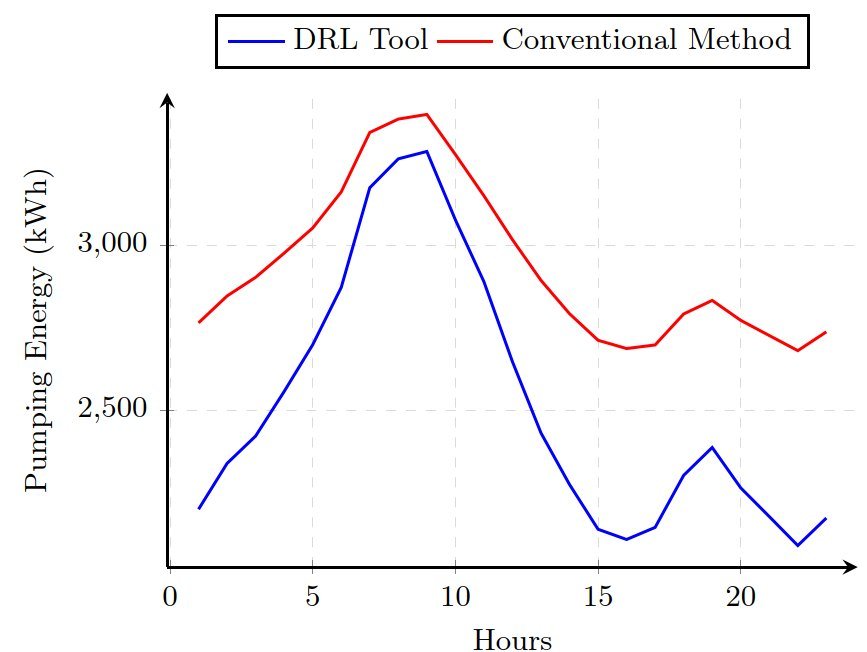
Deep reinforcement learning for pump pressure optimisation in a regional transmission network
A continuous-control DRL agent trained on an EPANET digital twin sets pressures at three pumping stations, keeping all 35 DMAs in service with an estimated 14% energy saving.
-
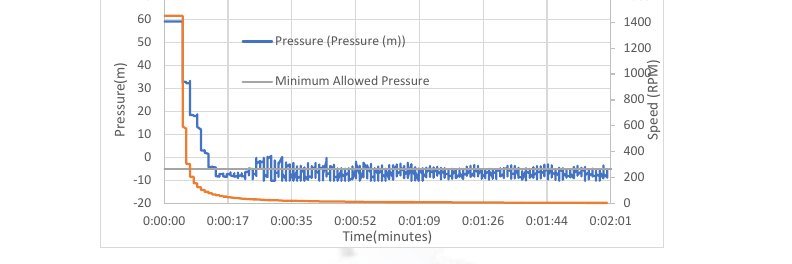
Surge vessel sizing for an irrigation pumping main: Hudariyat Island, Abu Dhabi
WANDA surge study of an irrigation pumping main on Hudariyat Island: a 1.5 m³ bladder surge vessel is sized by parameter study, with a safe demand closing time.
-
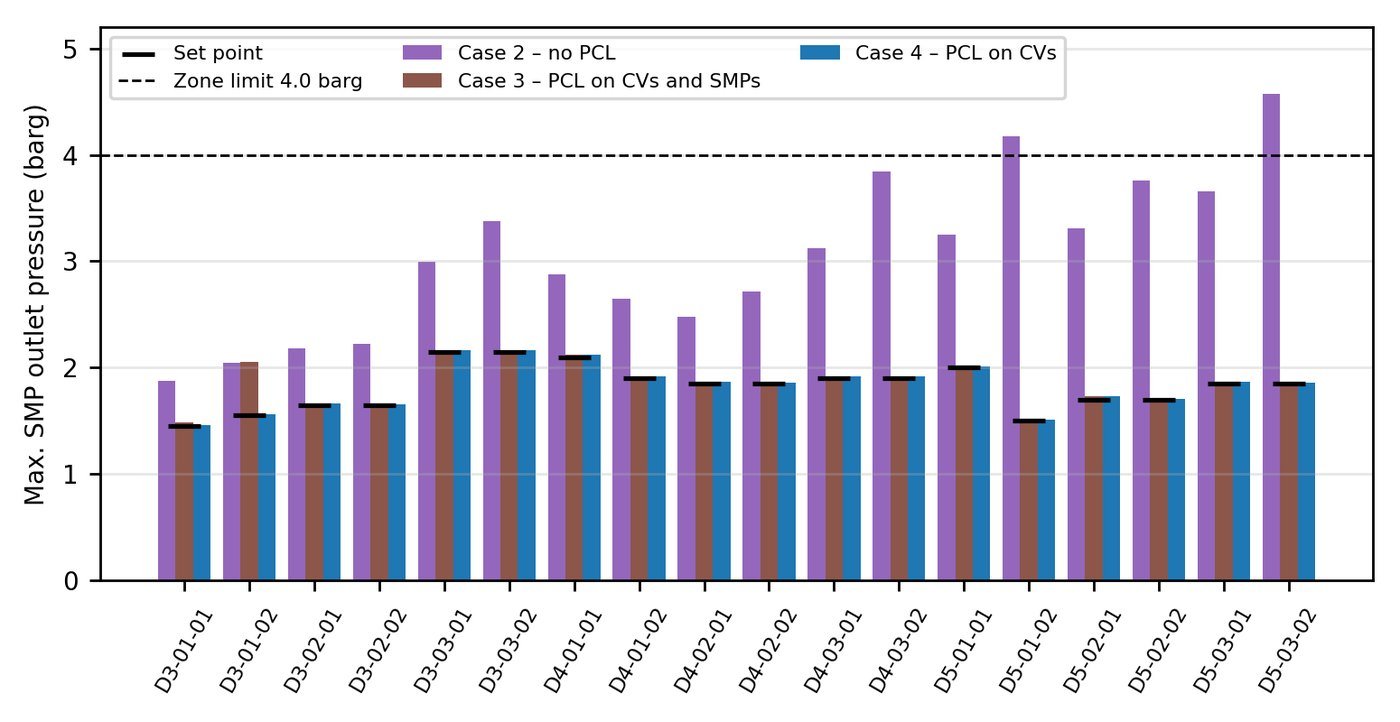
Transient analysis of a potable water network: KEZAD Area B1, Abu Dhabi
WANDA transient study of twin DN900 inlet mains, two ring mains and 18 PRVs. It confirmed the protection philosophy, removed a harmful interlock and set the valve stroke…
-
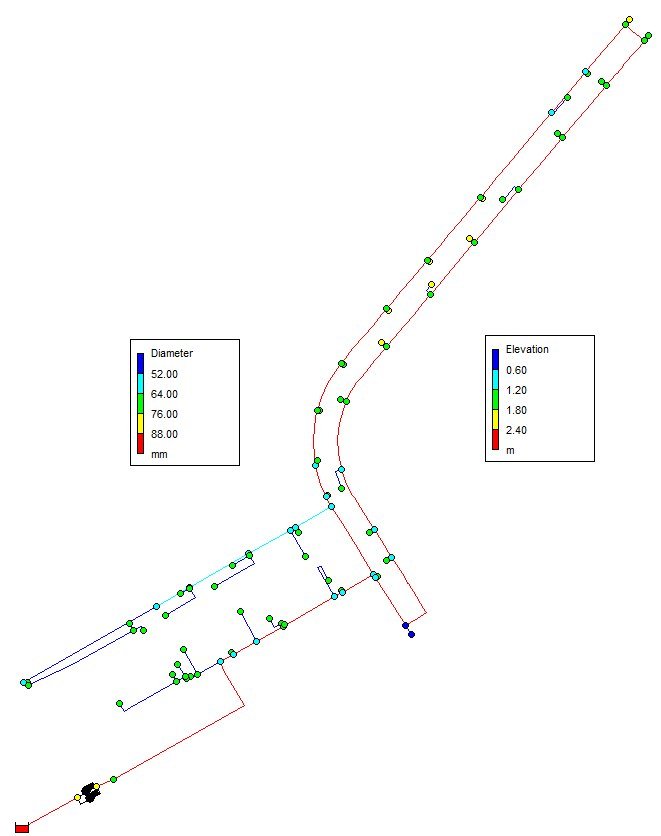
Irrigation pumping & HDPE network hydraulic study: Shuja Island, Abu Dhabi
EPANET extended-period study of an irrigation pump station and HDPE network, confirming the pump selection, pressures and velocities across the full irrigation cycle.
-

Farm water supply network: hydraulic & water quality study, Al Bahiya & Al Rahba
Steady-state and water quality modelling of a DN400 farm water network in Abu Dhabi. Pressures, valve settings and chlorine residual were verified for 30 additional farms.
Process
How we work with you
STEP 01
Brief & data
We confirm demands, pressure criteria, boundary conditions and the scenarios to run, and review the layout and survey data.
STEP 02
Modelling & options
We build or update the network model, run the agreed scenarios and test pipe, pump and valve options against the criteria.
STEP 03
Recommendations & handover
We report pressures, velocities and valve settings with clear recommendations, and hand over the model files on request.
Outputs
Typical deliverables
Each study is tailored to the project stage. Typical outputs include:
- Hydraulic study report with criteria, scenarios and recommendations
- Pressure and velocity maps for each demand case
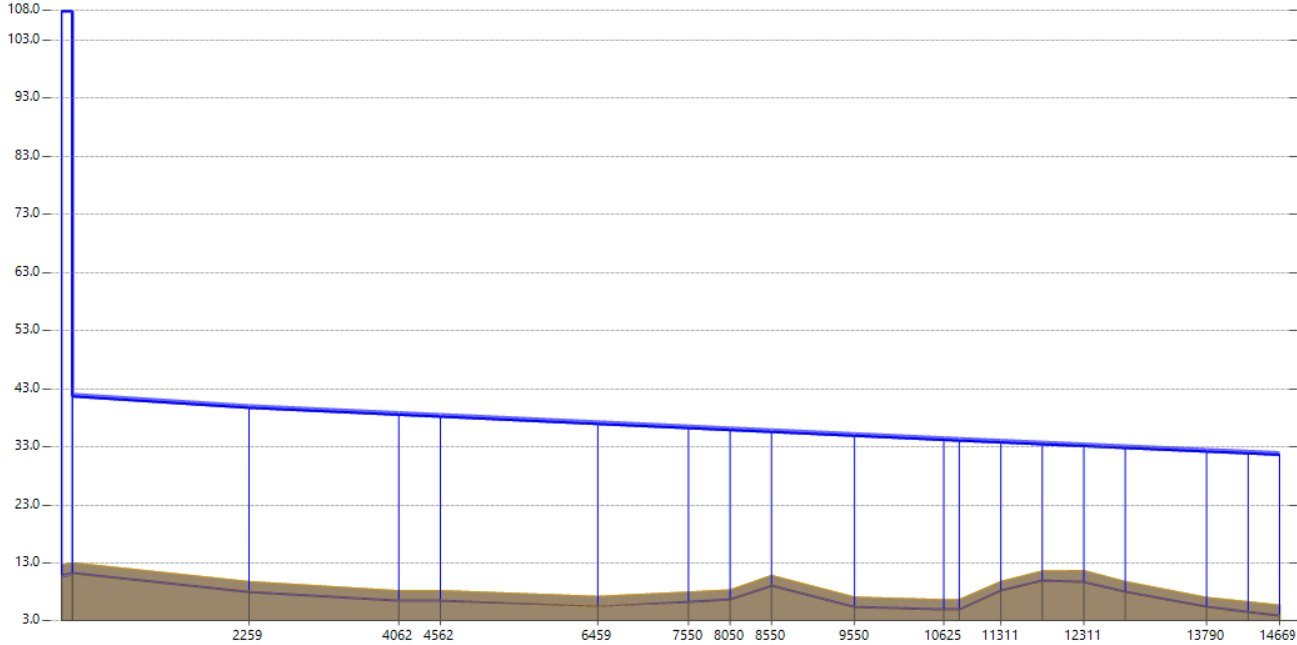
- HGL long profiles along trunk and critical mains
- Pump and valve settings, including tie-in pressures
- Model files, on request, for your team
Tools & methods
Tools and methods
We use industry-standard software and checks, in line with UAE utility and Abu Dhabi design criteria.
| Hydraulic software | InfoWorks WS Pro, Bentley WaterGEMS, EPA EPANET |
| Analysis | Steady state and extended-period simulation (24–48 h) |
| Data inputs | Survey levels, GIS layouts, demands and tie-in pressures |
| Verification | Mass balance, sensitivity runs and valve operating checks |
| Related studies | Water quality and surge analysis on the same model |
FAQ
Water network modelling FAQs
What is the difference between steady-state and extended-period simulation?
A steady-state run checks the network at one moment, such as peak day demand. An extended-period simulation (EPS) runs over 24–48 hours, so tank levels, pump cycling and valve settings change over time. Most UAE projects need both: steady state for sizing, and EPS to confirm operation.
Which software do you use for water network modelling?
We work in InfoWorks WS Pro, Bentley WaterGEMS and EPANET, and can deliver in the software your utility or consultant requires.
Can you model farm and irrigation networks in Abu Dhabi?
Yes. We have modelled farm water supply networks with hundreds of connections in Abu Dhabi, as well as irrigation pump stations and HDPE networks. See the Al Bahiya farm network case study.
Can the same model be used for water quality and surge studies?
Yes. Once the hydraulic model is built, we can extend it to water quality modelling (water age and chlorine residual) and to surge analysis without rebuilding it.