
Case study · Surge analysis
Surge vessel sizing for an irrigation pumping main: Hudariyat Island, Abu Dhabi
Transient analysis and surge vessel sizing for an irrigation pump station and ductile iron pipeline serving Hudariyat Island. The vessel volume and pre-charge were optimised to meet all pressure and volume criteria.
Client
MODON
Location
Hudariyat Island, Abu Dhabi
Scope
Pump trip, demand closure, vessel sizing
Tools
WANDA (Deltares)
Criteria
Pressure limits · minimum vessel water volume
50 L/s
Maximum design flow (180 m³/h)
DN600–DN300
Ductile iron pipeline
1.5 m³
Bladder surge vessel selected
30 s
Minimum closing time for customer demand
The challenge
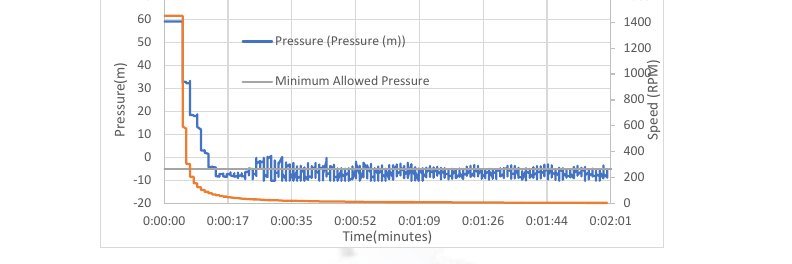
Cavitation after a pump trip
With all pumps tripping at maximum flow, the unprotected pipeline dropped below the minimum allowed pressure and cavitation occurred. The surge vessel had to be just large enough to prevent this, without exceeding the maximum pressure or draining below its minimum water volume.
Our approach
Transient analysis
- WANDA model of the pump station and DN600–DN300 ductile iron pipeline
- Pump trip at maximum flow without protection
- Parameter study of vessel volume and pre-charge pressure
- Selected vessel checked against minimum and maximum pressure and minimum liquid volume
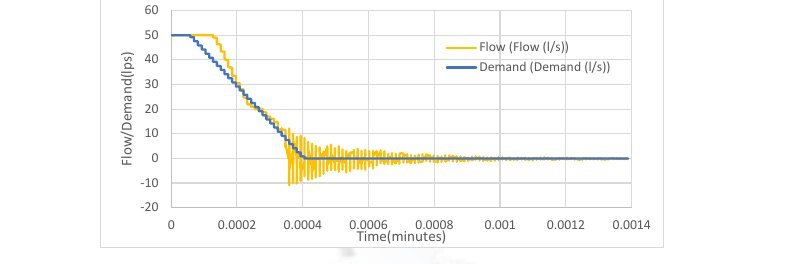
- Inadvertent closure of the customer demand with three pumps running
Results
Key results
Key findings
- Without protection, a pump trip causes sub-atmospheric pressure and cavitation.
- A vertical bladder surge vessel of 1.5 m³ with a 1.0 m pre-charge meets all criteria.
- The customer demand should close in no less than 30 s to avoid excessive pressure.
- The vessel must stay online at all times. A standby vessel is recommended so protection continues during maintenance.
Working on a similar project?
Share your pump station data, pipeline profile and valve details and we will advise on the right surge analysis scope.