
Case study · Surge analysis
Surge analysis of a sewage rising main: Saadiyat Island, Abu Dhabi
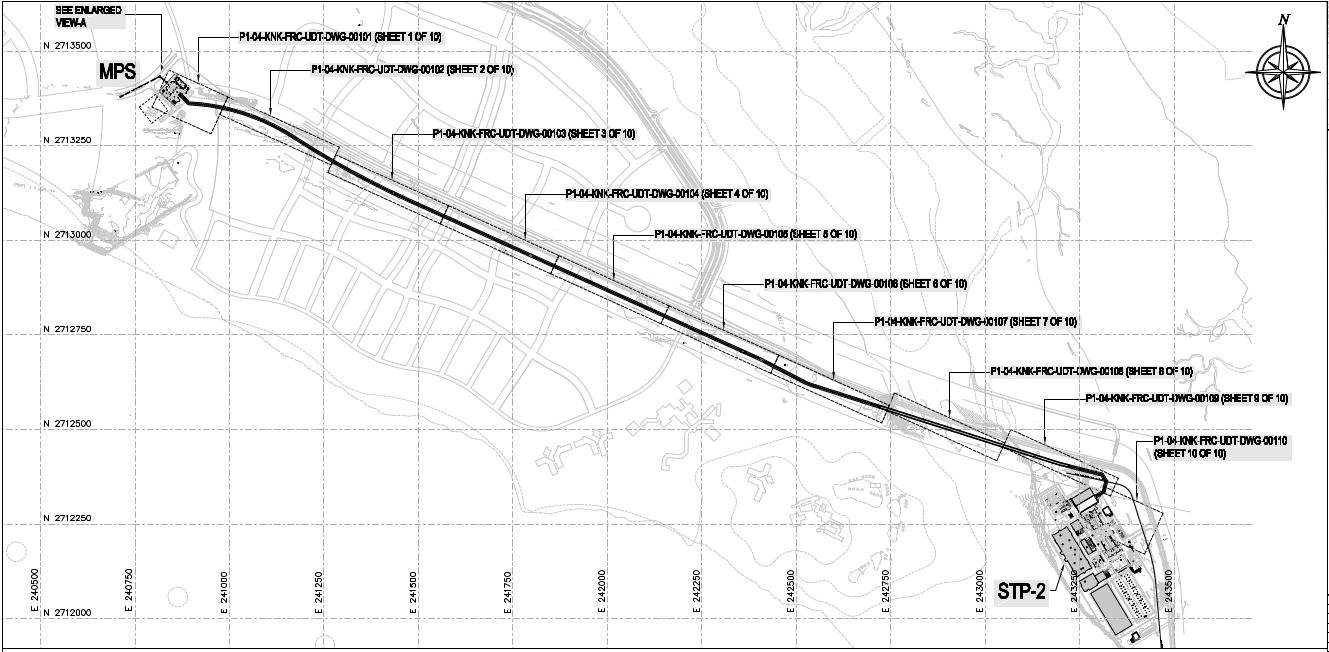
Steady-state and transient analysis of a sewage main pumping station and 2.8 km DN500 rising main, upgraded from two to three duty pumps. The study checked whether the existing surge protection still met the utility criteria.
Client
TAQA Water Solutions
Location
Saadiyat Island, Abu Dhabi
Scope
Pump trip, 2- and 3-pump operation
Tools
WANDA (Deltares)
Criteria
Min. −0.1 barg · max. 10 barg (MAOP)
2.8 km
DN500 GRP/HDPE rising main to the STP
2+1 → 3+1
Pump arrangement before and after the upgrade
−1.0 barg
Unprotected minimum pressure (limit −0.1 barg)
< 10 barg
Maximum pressure with protection (MAOP)
The challenge
A strict criterion for sewage
Sewage rising mains must not draw in air or separate, because sub-atmospheric pressure brings in air and debris. The utility criterion here is strict: no pressure below −0.1 barg. Adding a third duty pump increases the flow, and with it the potential downsurge on a pump trip.
Our approach
Transient analysis
- Steady-state check of two-pump and three-pump operation, confirming the HGL stays above the pipe and pumps work within range
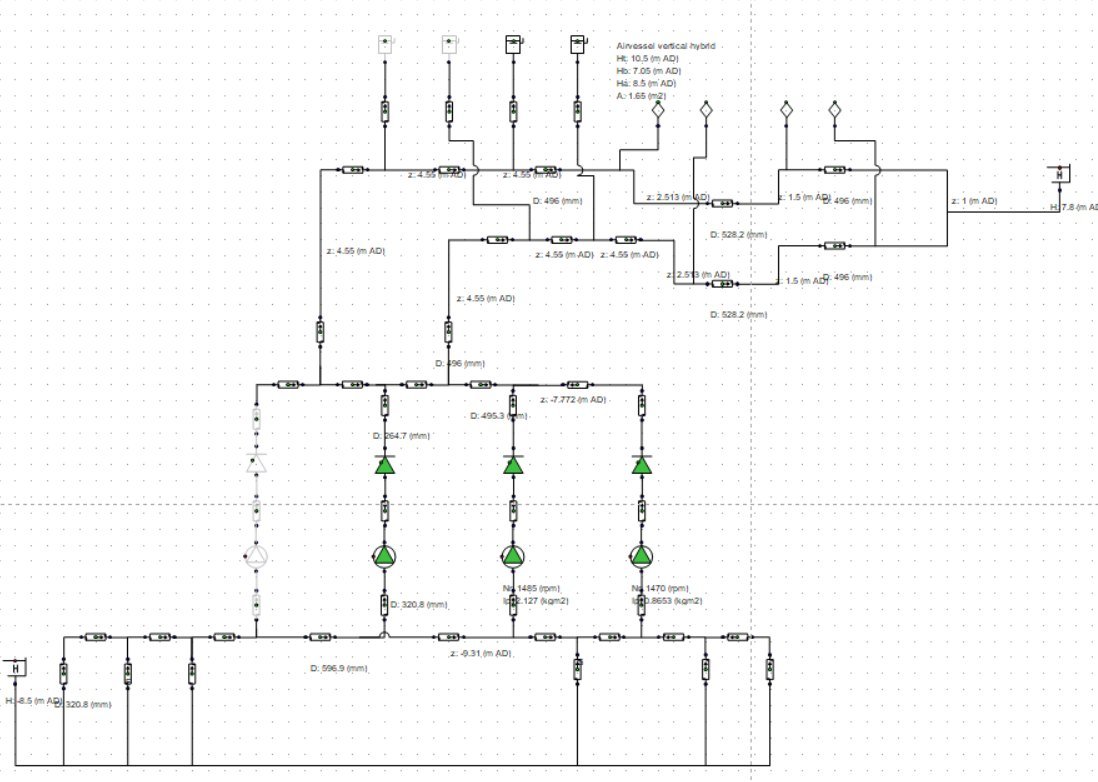
- WANDA transient model of the pumping station, GRP and HDPE rising main, and the STP inlet weir
- Pump trip without protection to establish the risk
- Pump trip with the existing surge protection, for both pump configurations
Results
Key results
Key findings
- Steady-state operation is stable for two and three duty pumps, with the HGL above the pipeline everywhere.
- Without protection, a pump trip drops pressure to about −1.0 barg, far below the −0.1 barg criterion, risking column separation and air ingress.
- With the existing surge protection, minimum pressures stay above −0.1 barg in all cases, for both pump configurations.
- Maximum pressures are well below the 10 barg MAOP, and transients damp out along the main.
Working on a similar project?
Share your pump station data, pipeline profile and valve details and we will advise on the right surge analysis scope.