
Case study · Surge analysis
Surge analysis of upgraded TSE pumping stations: Al Dhaid, Sharjah
Transient analysis of two upgraded treated sewage effluent (TSE) pumping stations and their distribution networks. The study checked whether the existing surge vessels and air valves still protect the system after the capacity upgrade.
Client
Sharjah Municipality
Location
Al Dhaid, Sharjah, UAE
Scope
Pump trip, standby start, valve closure
Tools
WANDA (Deltares)
Criteria
−0.5 to 8.0 barg (AWWA)
2 stations
PS-01 and PS-02 upgraded TSE pumping stations
−1.0 barg
Minimum pressure without protection
−0.5 to 8.0 barg
Achieved with the existing vessels and air valves
1 new air valve
The only addition needed
The challenge
More capacity, same protection?
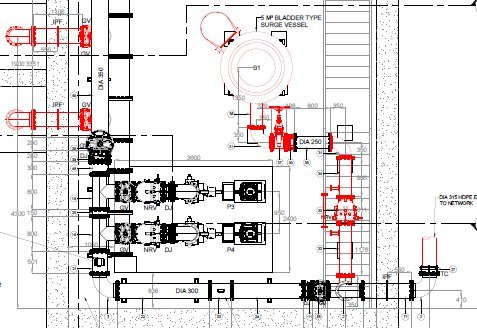
Raising the capacity of an existing pumping station changes the surge it creates. The question was whether the existing surge vessels and air valves, sized for the old duty, would still keep pressures within limits, or whether new protection was needed.
Our approach
Transient analysis
- WANDA models of both pump groups and their distribution networks fed from a common reservoir
- Pump trip without protection, then with the existing surge vessels
- Additional air valve locations tested where pressures stayed low
- Duty pump trip with delayed standby pump start to set a safe restart time
- Closure of the highest-demand tap-off valve with the duty pump running
Results
Key results
Key findings
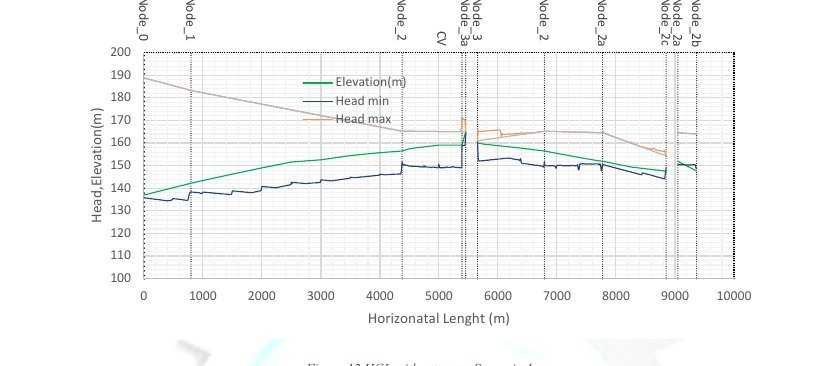
- Without protection, both stations see pressures down to −1.0 barg with a cavitation risk; air valves alone are not enough.
- At PS-01, the two existing 3.5 m³ vessels plus one new air valve upstream of a check valve bring pressures within −0.5 to 8.0 barg.
- At PS-02, the existing 5 m³ vessels and three air valves are sufficient.
- The standby pump must start no earlier than 120 s (PS-01) or 90 s (PS-02) after a duty pump trip.
- Tap-off valves must close in no less than 30 s.
Working on a similar project?
Share your pump station data, pipeline profile and valve details and we will advise on the right surge analysis scope.