
Case study · Surge analysis
Transient analysis of a potable water network: KEZAD Area B1, Abu Dhabi
Surge and transient analysis of a potable water network for an industrial zone. Twin DN900 inlet mains about 5.9 km long feed two ring mains and 18 pressure-reducing valves. The study confirmed the valve protection philosophy and set the operating settings.
Client
TAQA
Location
KEZAD Area B1, Abu Dhabi
Scope
Upstream pump trip, valve operation, interlocks, filling
Tools
WANDA (Deltares)
Criteria
Max. 16 barg · min. −0.5 barg · zones ≤ 4 barg
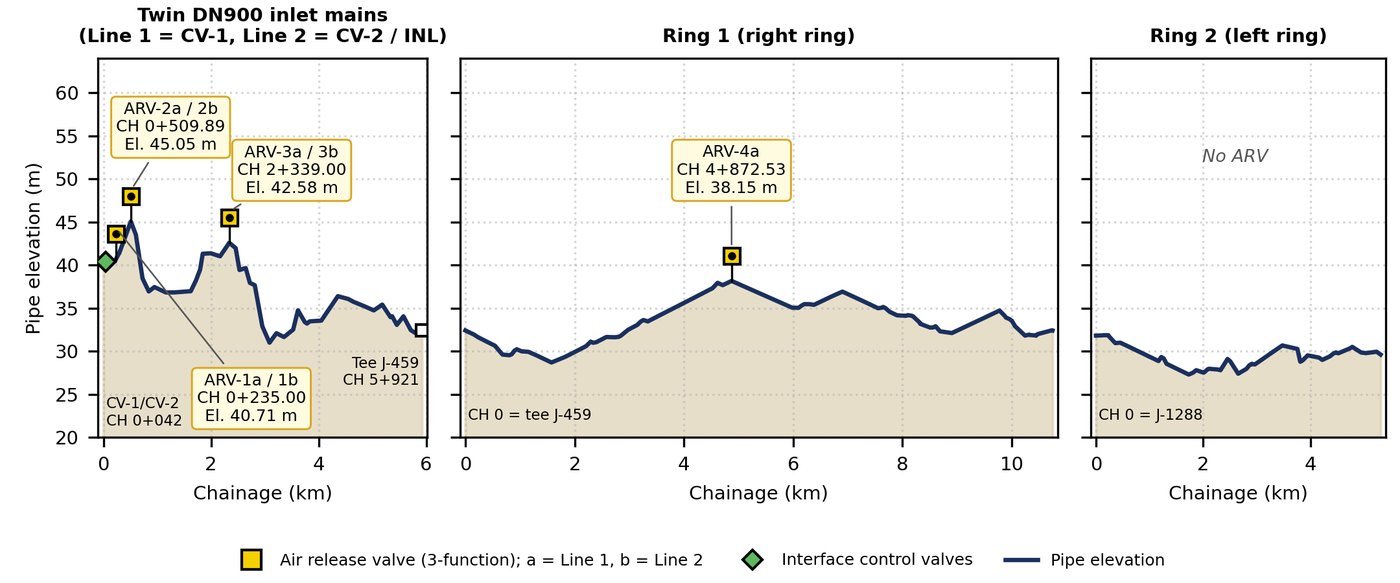
2 × DN900
Twin inlet mains, about 5.9 km
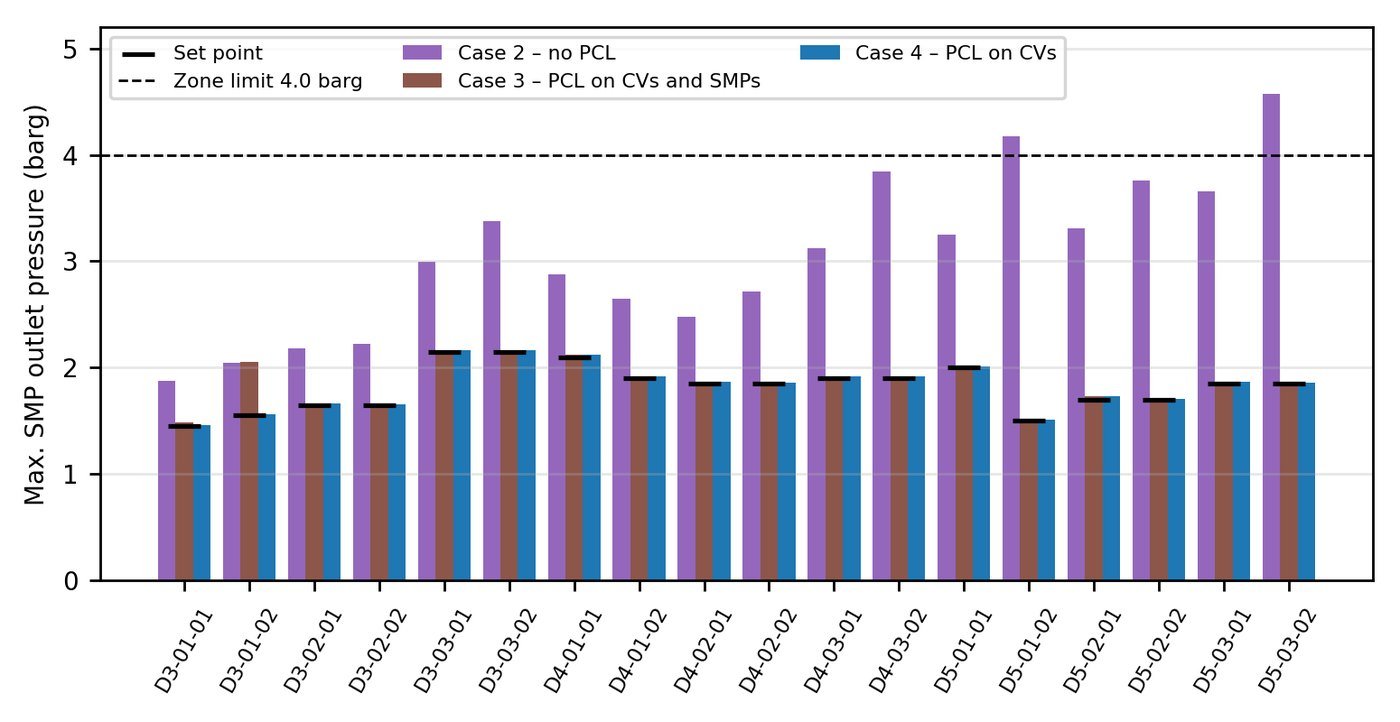
18 PRVs
Supply metering points across nine zones
12.75 barg
Highest transient pressure (limit 16 barg)
≥ 120 s
Valve stroke times confirmed
The challenge
Upstream disturbances and valve interactions
The network depends on a transmission system it does not control. A pump trip or valve closure upstream, an inadvertent valve movement or a badly set interlock can send pressure waves through the inlet mains and rings, causing sub-atmospheric pressure or over-pressuring the zones.
Our approach
Transient analysis
- WANDA model of the tie-in valves, twin DN900 inlet mains, both ring mains and all 18 supply metering PRVs
- Dynamic boundary data from the transmission operator for pump trip and valve closure upstream
- Inadvertent closure and opening of the interface control valves and the PRVs
- The proposed high-pressure interlock tested on and off
- Pipeline filling simulated to set a safe filling rate
- Recommended settings table issued for valves, interlocks and air valves
Results
Key results
Key findings
- Maximum transient pressure stays below 16 barg in all scenarios, with the highest at 12.75 barg.
- Air release valves are essential to the protection philosophy and must stay in service, including during filling and draining.
- The proposed high-pressure interlock that closes the upstream valves is not recommended: it interrupts supply and causes sub-atmospheric pressure, while the PRVs safely contain an inadvertent valve opening on their own.
- Stroke times of 120 s or more for the control valves, PRVs and DN900 isolation valves are adequate.
- A maximum filling flow of about 0.19 m³/s per inlet line is set for safe commissioning.
Working on a similar project?
Share your pump station data, pipeline profile and valve details and we will advise on the right surge analysis scope.