
Services · Stormwater & drainage · UAE
Stormwater modelling & drainage design in the UAE
We support municipalities, consultants and EPC contractors with stormwater modelling and drainage network design — helping you manage flood risk, size critical assets correctly and demonstrate performance against authority and client requirements. Based in Abu Dhabi, we design to Abu Dhabi Municipality (ADM) and UAE authority drainage criteria. We deliver studies across the UAE, the wider GCC and internationally, to the relevant local authority standards.
Networks & culverts
Urban drainage networks, storm sewers and culvert systems
Pump stations & storage
Stormwater pump stations, detention basins and outfalls
Flood & surcharge risk
Flooding, surcharge and overflow assessments under design storms
Why it matters
Why stormwater modelling matters
Across the UAE, short and intense storms, rapid urbanisation and tighter authority requirements are putting stormwater systems under pressure. Inadequate drainage can lead to property flooding, road closures, environmental spills and reputational damage for asset owners.
Robust stormwater modelling and drainage design allow you to:
- Check system performance for a range of design storms and climate-change scenarios
- Identify surcharging manholes, flooding locations and capacity bottlenecks
- Size pipes, culverts, detention basins and pump stations correctly
- Demonstrate compliance with local authority guidelines and client requirements
- Prioritise improvements and support business cases for capital works
Scope of services
What a stormwater modelling study includes
01
Data review & base model
- Review of drainage layouts, GIS, surveys and as-built information
- Definition of catchments, sub-catchments and key outfalls
- Set-up or refinement of SewerGEMS / SWMM / InfoWorks ICM models
- Representation of storage, pumps, controls and overflow paths
02
Hydrology, hydraulics & scenarios
- Design storms and runoff methods appropriate to the site
- System response under multiple rainfall events and durations
- Assessment of surcharging, flooding and spill locations
- Testing of upgrades, diversions and online/offline storage options
03
Design refinement & mitigation
- Sizing and optimisation of pipes, culverts, basins and pump stations
- Evaluation of green/blue infrastructure and attenuation options
- Recommendations to reduce flood risk and improve resilience
- Clear input to concept and detailed design stages
Recent projects
Stormwater projects in the UAE
-
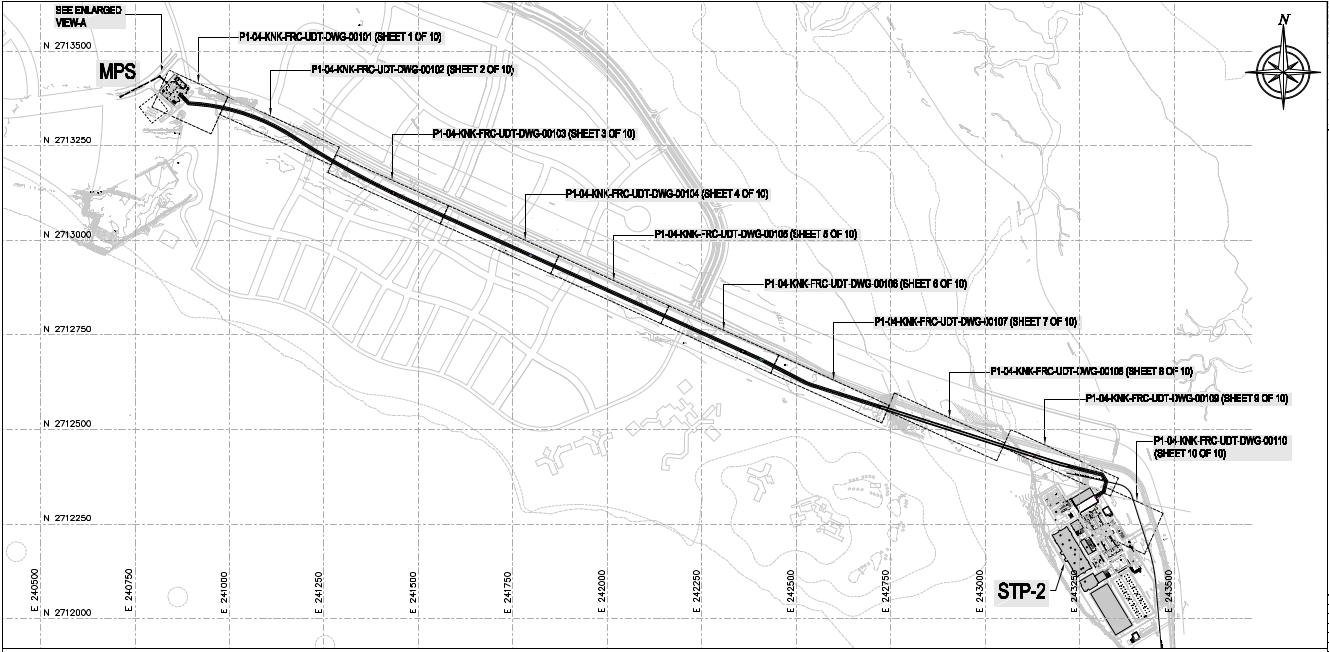
Surge analysis of a sewage rising main: Saadiyat Island, Abu Dhabi
WANDA surge analysis of a 2.8 km DN500 sewage rising main upgraded to three duty pumps, confirming the existing surge protection meets a −0.1 barg criterion.
-
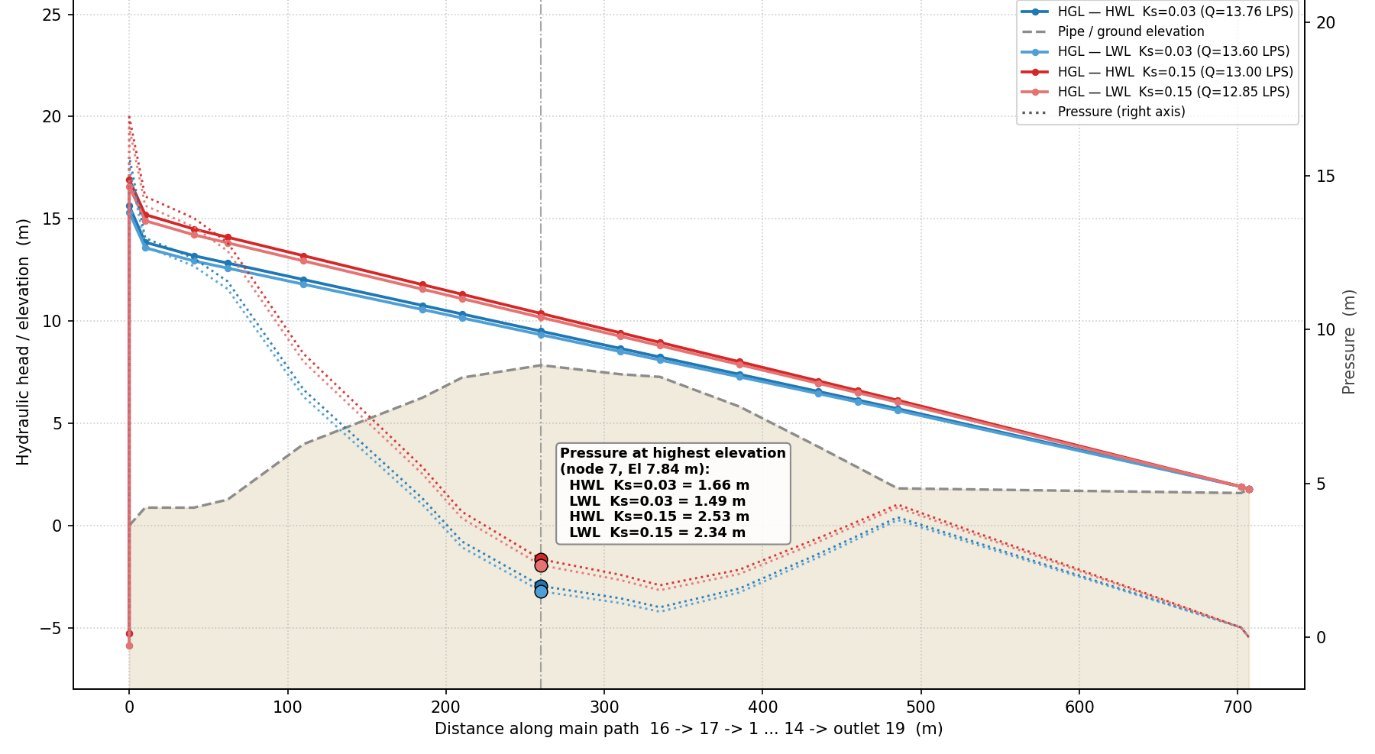
Sewage lifting station & force main hydraulic study: Shuja Island, Abu Dhabi
EPANET study of a sewage lifting station and 710 m HDPE rising main, confirming the pump selection and self-cleansing velocities across water level and roughness cases.
-
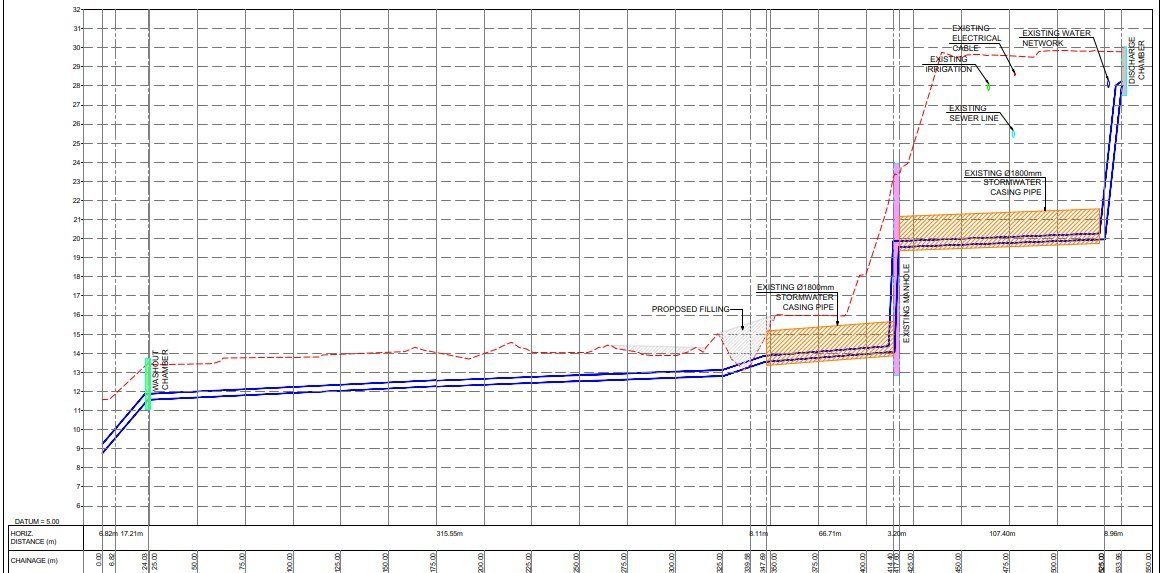
Stormwater pump station & force main design: Qasr Rawdat Al-Reef, Abu Dhabi
Life-cycle-cost sizing of an OD315 HDPE force main and selection of three 30 L/s stormwater pumps for 90 L/s, with parallel operation checked and the results verified in…
-
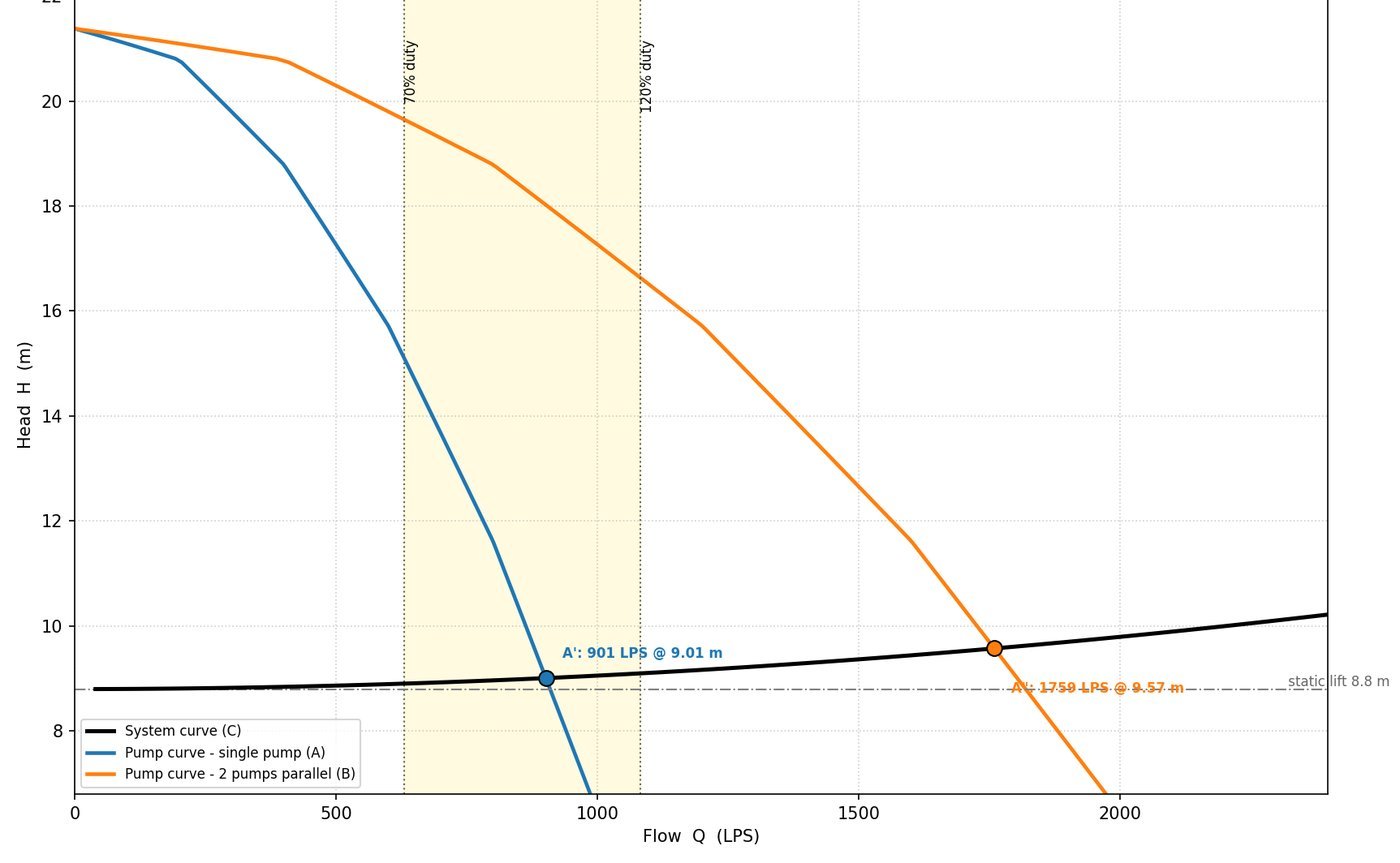
Stormwater pump station sizing & verification — coastal outfall, Abu Dhabi
Two 905 L/s duty pumps and a 407 m³ active wet well sized for a 1,811 L/s storm peak, then verified with pump vs system curves and an…
-
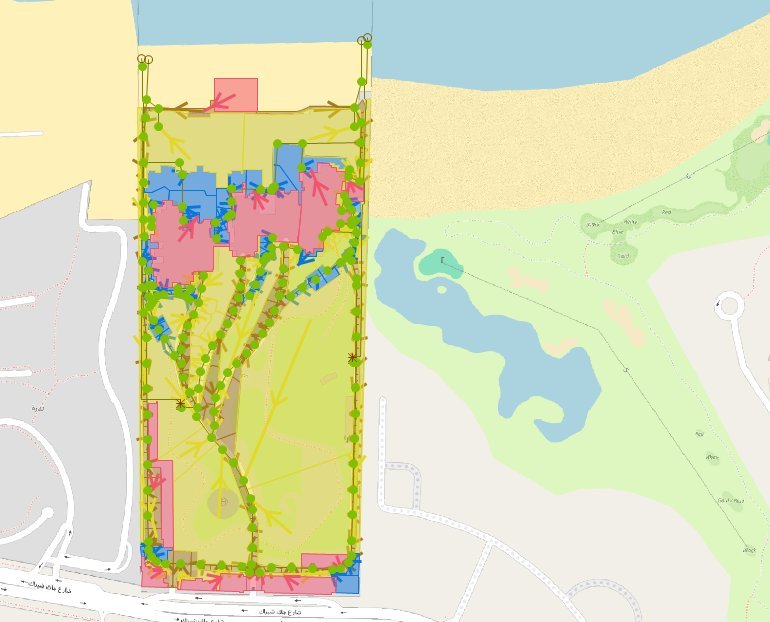
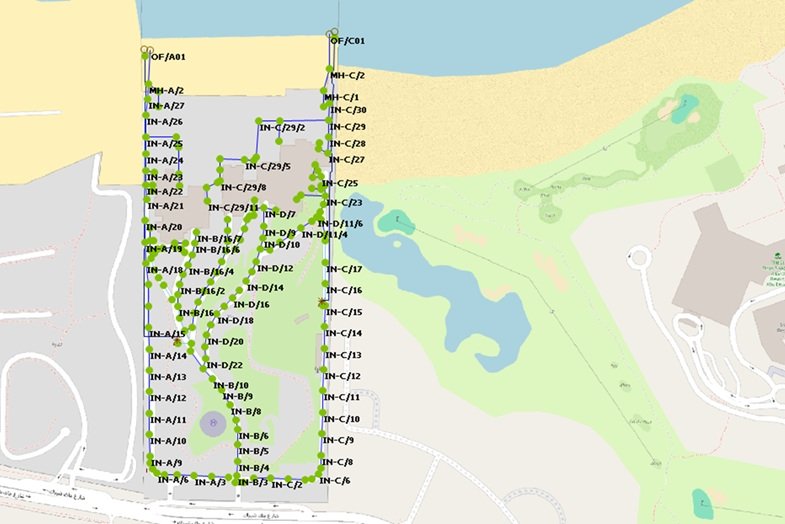
Stormwater network design & modelling — Saadiyat, Abu Dhabi
New stormwater network for a 10.4 ha coastal site with two lifting stations and storage cells. Modelled in InfoWorks ICM, with no flooding under the ADM 1-in-10-year design…
Process
How we work with you
STEP 01
Brief & data
We confirm the study objectives, review existing information and agree key locations, performance criteria and deliverables with your team.
STEP 02
Modelling & options
We build or refine the drainage model, run the agreed rainfall scenarios and test practical options to reduce flood risk and improve performance.
STEP 03
Recommendations & handover
We present the findings, document recommendations clearly and hand over plots and model files that support approvals and future scheme development.
Outputs
Typical deliverables
Each study is tailored to the scope and stage of your project. Typical outputs include:
- Summary report highlighting key risks, flooding locations and recommended works
- Flood maps of peak water levels, depths, velocities and surcharge extent
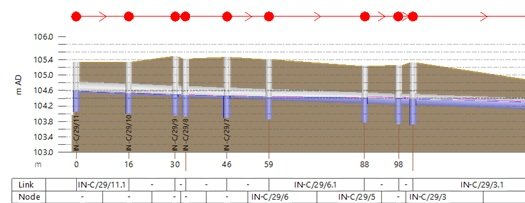
- Long sections and profiles for critical pipes, culverts and structures
- Option comparison of “existing” versus “with improvements” scenarios
- Design criteria for major assets such as basins and pump stations
- Model and run files, on request, for your internal use
Tools & methods
Tools and methods
We apply recognised software and hydrological methods, in line with UAE and Abu Dhabi Municipality (ADM) stormwater guidance, combined with practical engineering judgement to deliver reliable and defensible results.
| Hydraulic software | SewerGEMS, EPA SWMM, InfoWorks ICM and similar drainage tools |
| Hydrology | Design storms and runoff methods in line with local guidance, including climate-change uplift |
| Data inputs | Rainfall data, land-use information, surveys and flow data where available |
| Verification | Sanity checks, sensitivity runs and comparison with known flooding issues |
| Outputs | Maps, profiles and reports designed to support decision-making and approvals |
FAQ
Stormwater & drainage design FAQs
Which design storms are used for stormwater design in Abu Dhabi and the UAE?
Abu Dhabi Municipality (ADM) guidelines require stormwater networks to be designed for a 1-in-10-year storm and checked against a 1-in-25-year event. We apply ADM rainfall (IDF) data, runoff coefficients and time-of-concentration factors, and can add climate-change uplift factors where the client requires them.
Which drainage modelling software do you use?
For stormwater modelling we use InfoWorks ICM, SewerGEMS and SWMM, and use EPANET with Python for pump station and force main checks. We can work in your preferred software and hand over model files on request.
Do you size and verify stormwater pump stations?
Yes. We size pump capacity, wet-well volume and operating levels to the ADM Stormwater & Sub-soil Drainage Systems Design Manual, then verify the selection with pump and system curves and an extended-period simulation. See our coastal pump station case study.
What information do you need to start a drainage study?
For projects anywhere in the UAE, we typically need a site layout or topographic survey, the proposed land use, any existing drainage or as-built drawings, and the outfall or discharge constraints. If you already have a model, we can review and update it rather than start from scratch.