
Services · Water quality modelling · UAE
Water quality modelling in the UAE
We support utilities, consultants and EPC contractors with water quality modelling of transmission mains, storage tanks and distribution networks: water age, chlorine and chlorine dioxide decay, disinfection by-products and dosing strategy, to Abu Dhabi DoE and UAE utility requirements. We deliver studies across the UAE, the wider GCC and internationally, to the relevant local authority standards.
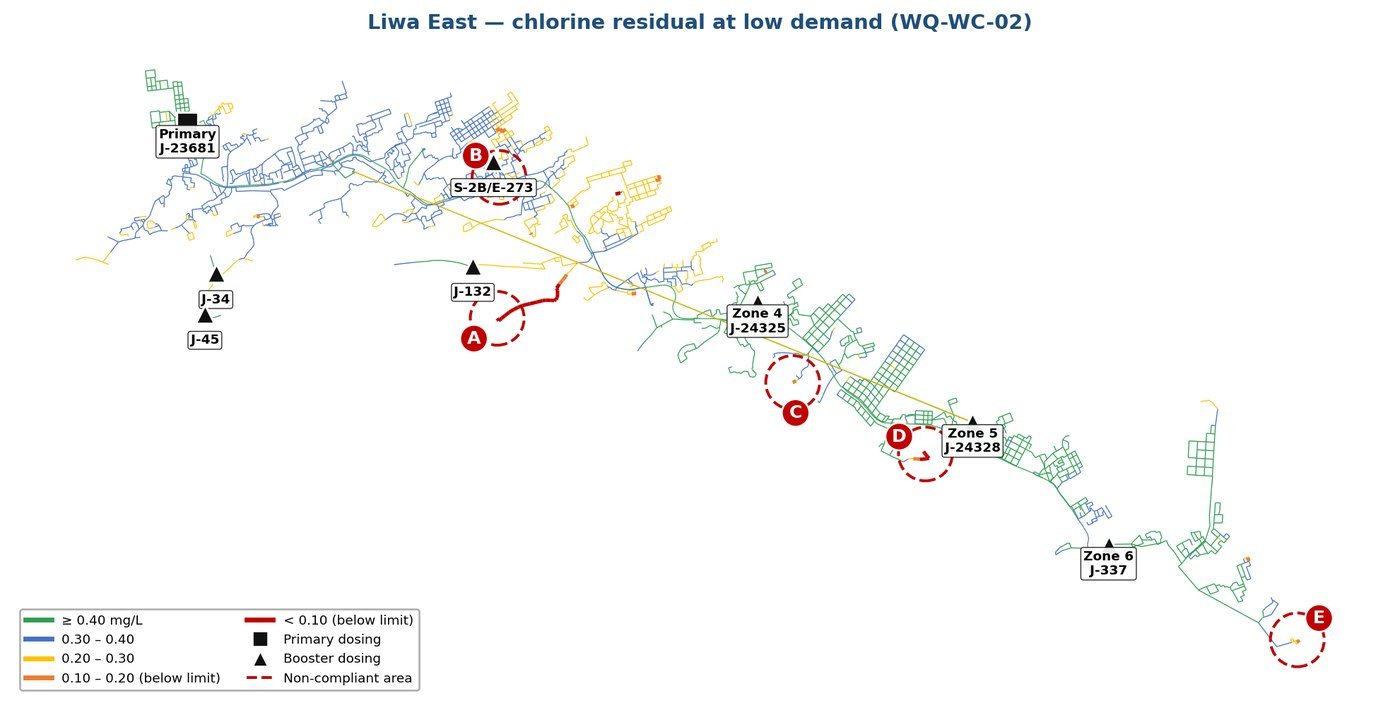
Water age
Residence time in mains, tanks and remote zones
Disinfectant decay
Free chlorine, chlorine dioxide and by-products (MSX)
Dosing strategy
Dosing points, boosters and hypochlorination capacity
Why it matters
Why water quality modelling matters
In the UAE, long transmission mains, large storage and water temperatures of up to 45 °C speed up disinfectant decay. At low demand, water can sit in the system for days, and remote connections can fall below the minimum chlorine residual even when the hydraulics are fine.
A water quality modelling study shows where and when this happens, and what dosing or operational change fixes it, before the network is commissioned or extended. We have carried out water quality modelling for transmission schemes over 100 km long and for farm networks with more than 8,000 connections.
Robust water quality modelling allows you to:
- Demonstrate compliance with DoE minimum and maximum residual limits at every connection
- Find the locations and operating conditions with the oldest water and lowest residual
- Plan primary and booster dosing points and size the hypochlorination plant
- Check chlorite, chlorate and bromate formation where chlorine dioxide is used
- Test operational fixes, such as minimum flows, before investing in new plant
Scope of services
What a water quality modelling study includes
01
Water age & residence time
- Extended-period simulation to steady water quality
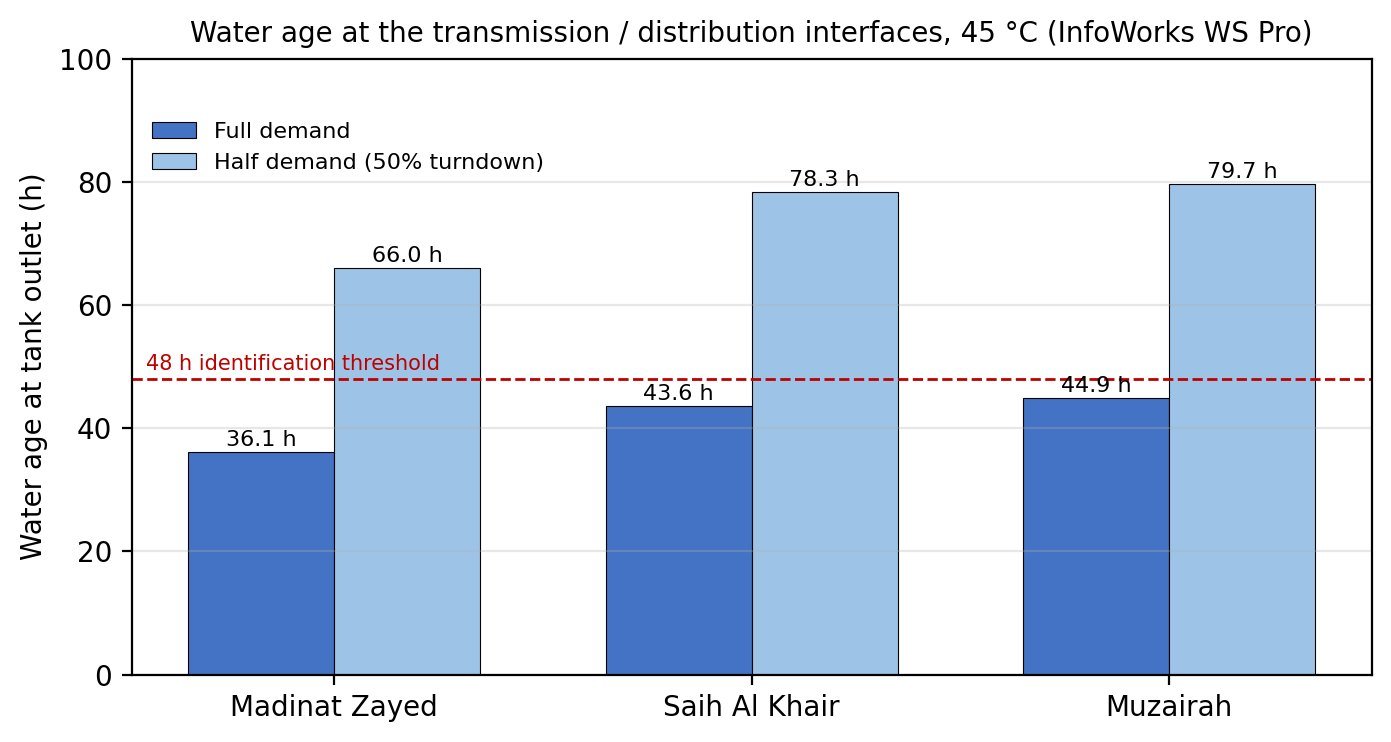
- Tank turnover and low-demand scenarios
- Governing locations and critical paths
- Links to CFD tank mixing studies
02
Disinfectant decay & by-products
- Free chlorine with bulk and wall decay
- Chlorine dioxide, chlorite and chlorate (MSX)
- Bromate risk where bromide is present
- Coefficients from bottle tests at design temperature
03
Dosing strategy & compliance
- Primary, booster and in-line dosing points
- Hypochlorination capacity per dosing point
- Compliance at every connection
- Operational mitigation and recalibration plan
Recent projects
Water quality projects in the UAE
-
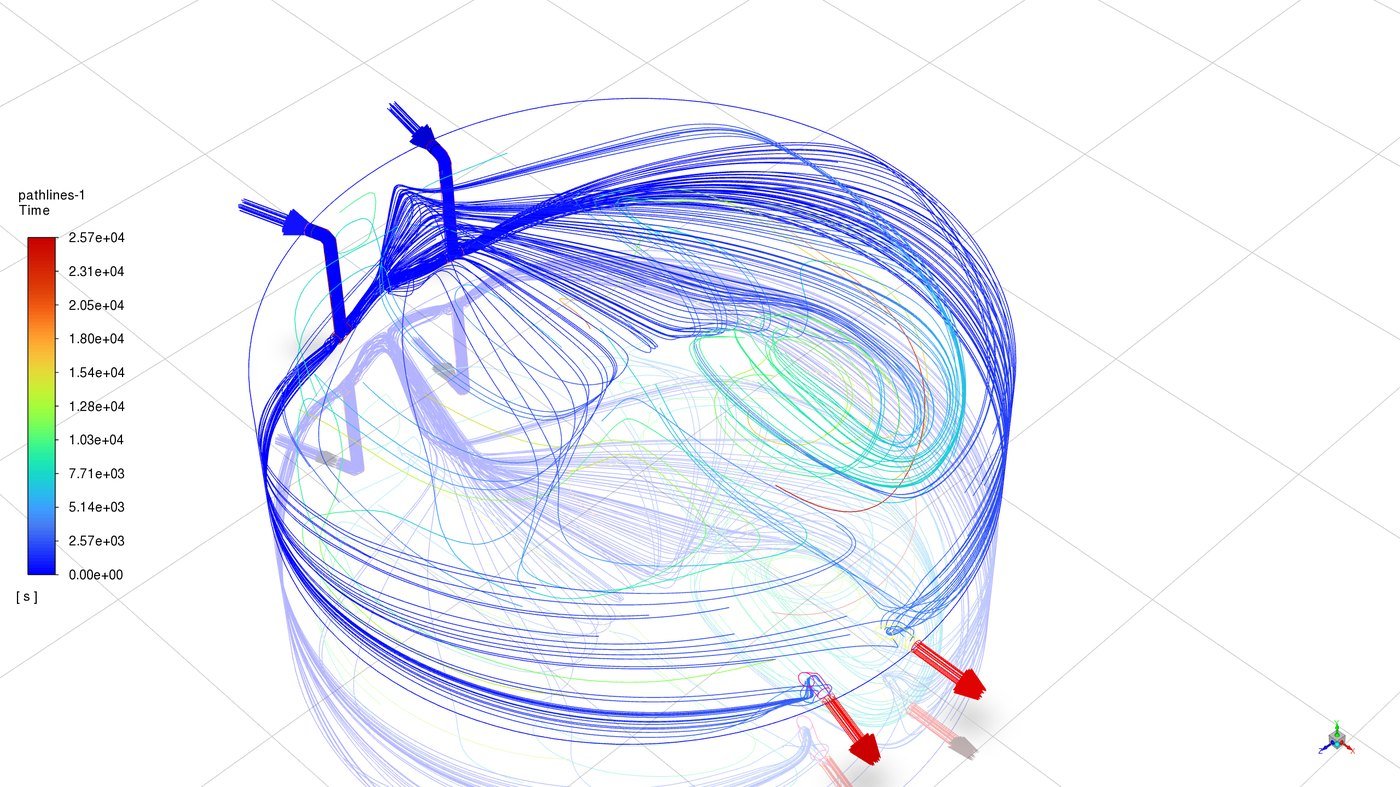
CFD study of a 20 MIG water storage tank: mixing, stratification & chlorine, Al Ain
CFD of a 90 m diameter potable water tank: tracer residence time and dead zones, roof-driven thermal stratification and chlorine decay, with an inlet change tested to keep…
-
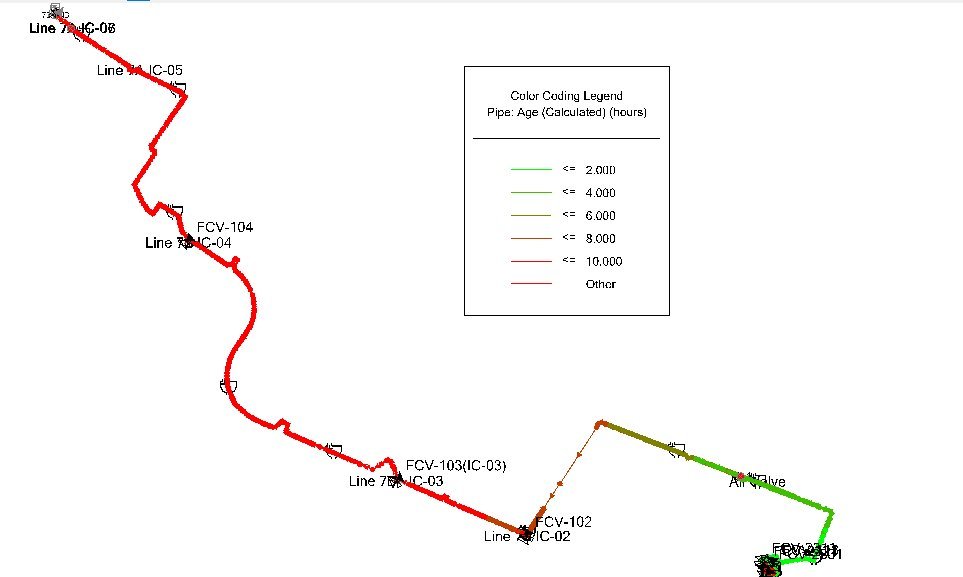
Water age & chlorine residual study: tanks, pumping station and transmission lines, Al Bedai
WaterGEMS water age and chlorine study that found a low-demand residual shortfall and restored compliance by keeping a minimum flow, cutting water age from 96 h to 36…
-
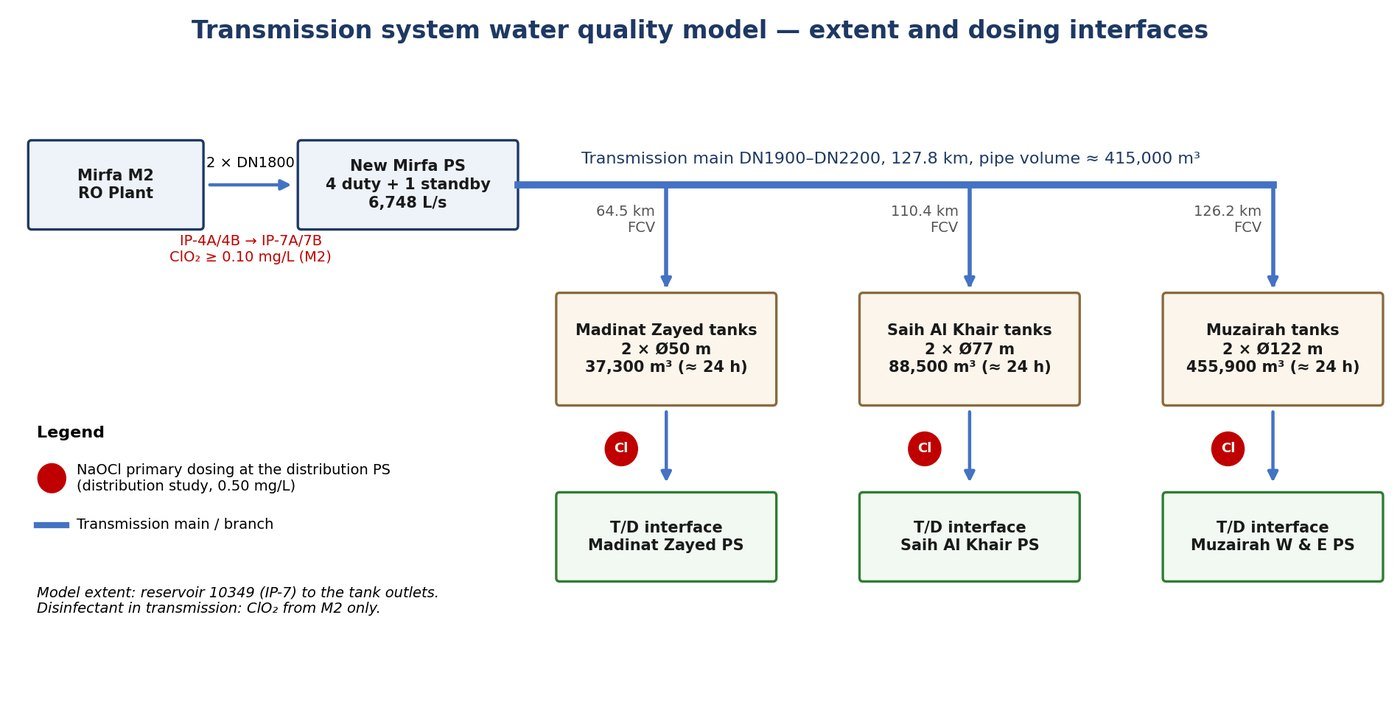
Water quality modelling of a 128 km transmission main and farm networks, Mirfa–Liwa
Multi-species chlorine dioxide and free chlorine modelling for a 128 MIGD scheme serving 8,011 farms, covering water age, by-products, dosing strategy and hypochlorination sizing.
-
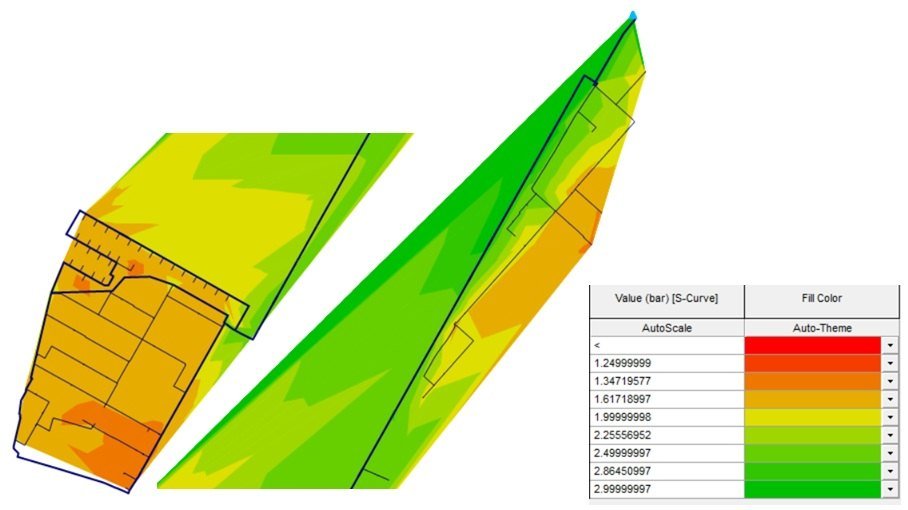
Farm water supply network: hydraulic & water quality study, Al Bahiya & Al Rahba
Steady-state and water quality modelling of a DN400 farm water network in Abu Dhabi. Pressures, valve settings and chlorine residual were verified for 30 additional farms.
Process
How we work with you
STEP 01
Brief & data
We confirm the residual criteria, decay coefficients, source quality and the demand scenarios, building on your hydraulic model where available.
STEP 02
Modelling & options
We run extended-period water quality simulations, identify governing locations and test dosing and operational options.
STEP 03
Recommendations & handover
We report compliance, dosing locations and capacities with clear recommendations, and hand over model files on request.
Outputs
Typical deliverables
Each study is tailored to the scheme and its regulator. Typical outputs include:
- Water quality study report with criteria, scenarios and recommendations
- Water age and residual maps for each scenario
- Compliance tables by zone or individual connection
- Dosing strategy with hypochlorination capacity
- Model files, on request, for future recalibration
Tools & methods
Tools and methods
We use recognised water quality software and methods, in line with the DoE Water Quality Regulation and UAE utility requirements.
| Software | InfoWorks WS Pro (MSX), Bentley WaterGEMS, EPA EPANET |
| Constituents | Water age, free chlorine, chlorine dioxide, chlorite, chlorate, bromate |
| Decay model | First-order bulk and wall decay from bottle tests |
| Design basis | 45 °C design temperature, full and low demand |
| Related studies | CFD tank mixing and water network modelling |
FAQ
Water quality modelling FAQs
What chlorine residual is required in Abu Dhabi?
Under the DoE Water Quality Regulation 2025, free chlorine at the customer connection must be between 0.20 and 0.50 mg/L. Our studies check every connection against both limits at full and low demand.
Why does water age matter so much in UAE networks?
Higher water temperatures speed up chlorine decay, and large storage and long mains increase residence time. The oldest water often sits at the far end of the network at low demand, which is where residuals fail first.
When is multi-species (MSX) modelling needed?
When more than one substance matters at the same time, for example chlorine dioxide from a desalination plant together with chlorite, chlorate and bromide. MSX tracks how they react together, which a single-species model cannot do.
Can water quality be improved without new dosing plant?
Often, yes. On a recent project, keeping a minimum flow to a remote reservoir cut water age from 96 to 36 hours and restored compliance. See the Al Bedai case study.