
Surge Analysis & Transient Modelling for Water-Transmission Systems
Surge analysis is essential for protecting water-transmission pipelines from damaging pressure spikes and water hammer. A proper transient analysis helps prevent pipe bursts, cavitation, equipment failures and costly operational disruptions in critical water infrastructure.
Rapid flow changes caused by pump trips, valve closures, power failures or operational adjustments can generate high-magnitude pressure waves that exceed pipeline design limits. Without a robust surge analysis, these transients may lead to pipe bursts, joint failures, negative pressures, column separation, equipment damage and unplanned outages.
At FluidMechanica, we provide specialist surge and transient analysis services for complex water-transmission schemes, pumping stations and regional supply systems, helping clients reduce risk and improve operational reliability.
What Is Surge (Water Hammer) in Pipelines?
Surge, or water hammer, is a pressure wave that travels through a pipeline when the velocity of flow changes suddenly. In long water-transmission mains and high-capacity pumping stations, these pressure waves can be severe and must be properly controlled.
Causes of Surge
- Sudden pump trips or emergency shutdowns
- Rapid valve closures or openings
- Power failures affecting multiple pumps
- Unexpected operational changes and manual interventions
- Filling, draining or reconfiguring transmission mains
Consequences of Poorly Controlled Surge
A detailed surge analysis allows owners, designers and operators to understand how their system behaves under real operating and emergency conditions, and to design appropriate surge-protection measures.
- Over-pressure leading to pipeline bursts and leaks
- Temporary vacuum conditions and risk of contamination
- Cavitation, column separation and re-joining impacts
- High mechanical loads on pumps, valves and fittings
- Reduced asset life, frequent repairs and unplanned outages
Why Surge Analysis Matters for Your System
Surge analysis is essential for protecting water-transmission systems from damaging pressure fluctuations and ensuring safe, reliable operation. Rapid changes in flow — caused by pump trips, valve closures, power failures, or operational adjustments — can generate high-magnitude pressure waves that exceed pipeline design limits. Without proper transient analysis, these events may result in pipe bursts, cavitation, equipment failures, and costly unplanned outages.
At FluidMechanica, we apply advanced hydraulic-transient modelling tools to simulate and assess how your system responds to real operating scenarios. We evaluate pump start-ups, shutdowns, valve operations, emergency events, and abnormal conditions to identify vulnerabilities and define effective surge-protection measures.
Investing in a professional surge study helps you to:
- Reduce the risk of pipeline bursts, leaks and catastrophic failure
- Limit cavitation, vibration and fatigue in pumps and valves
- Protect surge vessels, air valves and associated equipment
- Improve operational safety, resilience and service continuity
- Support design approvals for new EPC projects and upgrades
For utilities and EPC contractors, an early surge analysis can also reduce redesign, claims and changes during construction.
Our Surge-Analysis Methodology
At FluidMechanica, we apply advanced hydraulic transient-modelling tools to simulate dynamic system response and understand how your assets behave under real-world operating and emergency conditions.
- Building or reviewing a hydraulic model of the transmission system
- Defining realistic operating conditions
- Simulating pump trips, start-ups and shutdowns
- Assessing valve operations, power failures and control logic
- Reviewing surge vessels, air valves and non-return valves (NRVs)
- Identifying over-pressure and vacuum hazards
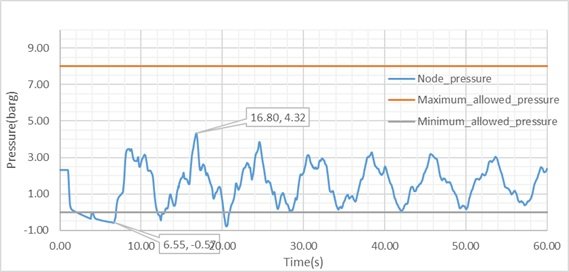
Example scenario: A sudden pump trip at a remote station may generate a negative-pressure wave that propagates along the main, causing column separation at high points and potentially leading to damaging pressure spikes when the columns re-join. Our analysis quantifies these effects and tests mitigation options.
What we offer in a surge analysis study
1. System understanding
- Review of P&IDs, profiles and design reports
- Definition of operating scenarios (normal, start-up, shutdown, emergency)
- Assumptions on pump curves, valve characteristics and control logic
2. Transient modelling
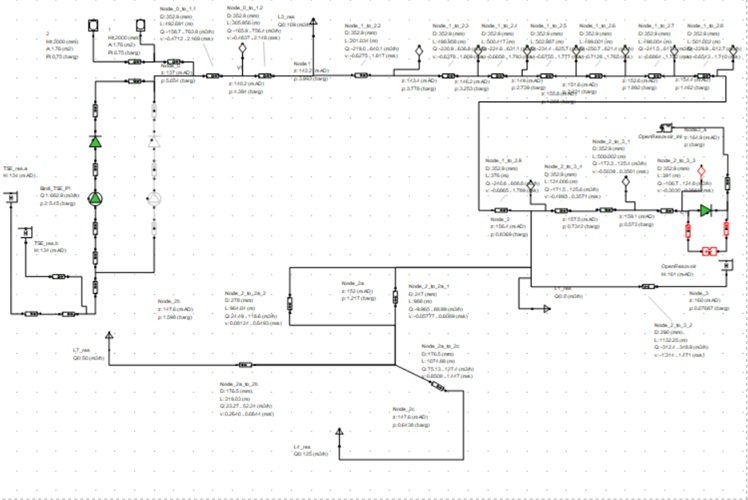
- Development or checking of surge models in WANDA / Bentley HAMMER
- Simulation of pump trips, valve operations and control-system responses
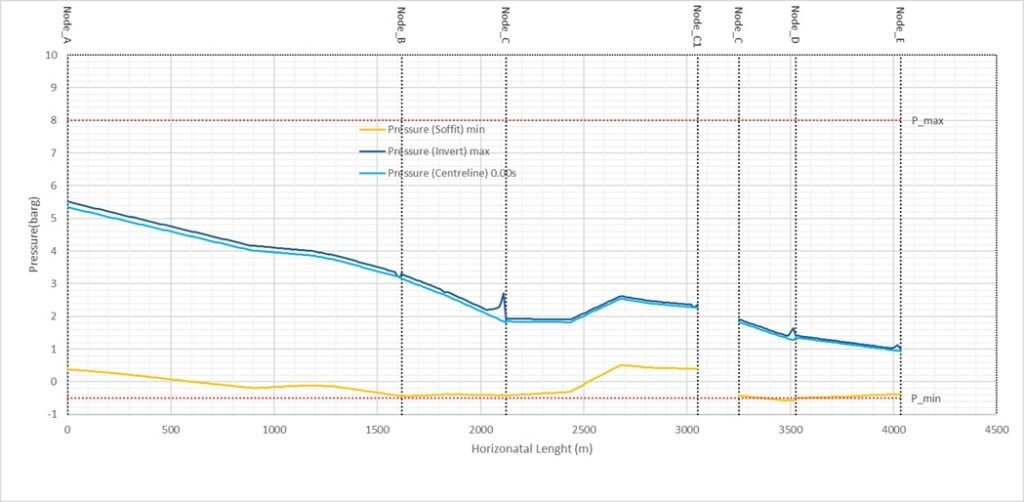
- Calculation of pressure envelopes along critical mains and branches
3. Protection and optimisation
- Surge vessel and air-valve sizing and location recommendations
- Assessment of non-return valve behaviour and potential slam issues
- Options to improve operational sequences and reduce risk
Typical Surge-Protection Measures We Assess
- Optimised surge-vessel sizing and pre-charge pressure
- Air valve and vacuum-breaker valve specifications
- Check-valve closure characteristics and surge behaviour
- Pump ramp-up/ramp-down sequences
- Safe valve operation rules
- Operational strategies to reduce transient severity
What You Receive from a Surge Analysis Study
We tailor the level of detail to your project stage (concept, detailed design, due diligence, or troubleshooting), but a typical surge study will include:
- Engineering report summarising system behaviour and key risks
- Pressure and flow plots at critical points
- Over-pressure and vacuum event identification versus allowable limits
- Recommendations for surge vessels, air valves, NRVs and control strategies
- Design inputs for multidisciplinary teams (civil, mechanical, electrical, controls)
- Implementation recommendations and options for phasing
- Model files (WANDA / HAMMER) and input data, on request, for your internal use
Tools and methods
We use industry-standard transient modelling tools and apply them with a strong engineering focus rather than a purely software-driven approach.
- Surge software: WANDA, Bentley HAMMER and similar tools
- Hydraulic data: pump curves, valve characteristics, line profiles, pipe properties
- Control logic: pump start / stop rules, PRV settings, PLC/SCADA sequences as provided
- Verification: sensitivity checks, scenario testing and sanity checks against experience
Typical Applications
- Large-diameter water-transmission mains
- High-capacity pumping and booster stations
- Reservoir inlet/outlet systems
- Interconnected regional schemes
- New EPC projects and system upgrades
How we typically work with you
Step 1 – Brief & data
We review your project brief, drawings and existing models, and agree scenarios, assumptions and deliverables with your team.
Step 2 – Modelling & iteration
We develop or refine the surge model, run agreed scenarios and test mitigation options such as surge vessels, air valves and control changes.
Step 3 – Recommendations & handover
We present key findings to your team, document recommendations, and provide plots and model files for design records and future use.
Why Work with FluidMechanica?
- Specialist focus on water-transmission systems and surge analysis
- Strong background in transient modelling, EPC design and operational troubleshooting
- Experience with international standards and industry best practice
- Effective coordination with multidisciplinary teams (civil, mechanical, electrical, controls)
- Clear reporting and communication aimed at both technical and non-technical decision-makers
Frequently Asked Questions
When should I commission a surge analysis?
Whenever you design or modify a transmission main or pumping station, change operating strategy, or add major assets such as surge vessels, service reservoirs or new pump units, a surge analysis should be carried out or updated.
What information do you need?
Pipeline details, pump data, valve specifications, profiles, P&IDs, and operating philosophy. We can work with preliminary data at concept stage and refine inputs as the design progresses.
Do you work only in the UAE?
No, we support clients across the GCC and globally with remote coordination. Model files, meetings and reviews are handled online, with clear documentation and version control.
Next Steps – Talk to Us About Your Surge-Analysis Requirements
If you are planning or upgrading a transmission main, a detailed surge analysis reduces risk and helps you make robust design and operational decisions.
Contact the FluidMechanica team to discuss your system and arrange a study.
Useful Engineering Tool
Surge Vessel Sizing – Preliminary Estimator
This tool provides an indicative surge vessel volume and recommended precharge pressure based on pump flow and pump station head. It is intended to support early-stage design and option evaluation.
Engineering note: This estimator is intended for concept development and preliminary option assessment only. Final surge vessel sizing shall be confirmed through a detailed transient (surge) analysis considering system hydraulics, operational scenarios, allowable pressure limits, and applicable standards.